
Why Chronic Absenteeism Keeps Growing in Schools Across Canada
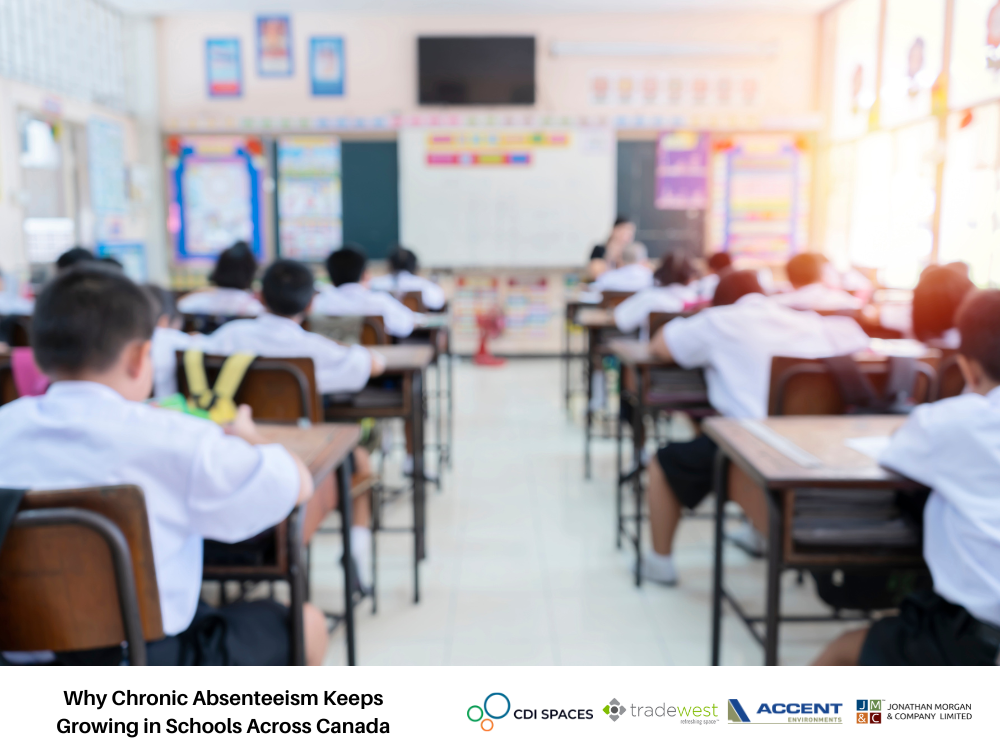
Chronic absenteeism, defined as missing 10% or more of the school year, has become one of the most pressing challenges facing Canadian schools. What once appeared to be a temporary disruption tied to the pandemic is now a sustained pattern. Attendance has not fully recovered, and educators across the country are seeing long term impacts on learning, engagement, and school culture.

The State of Attendance in Canadian Schools
Across Canada, absenteeism rates continue to climb. In British Columbia, data reviewed by CBC News shows that student absences in some of the province’s largest school districts have nearly tripled compared to pre-pandemic levels. Educators warn that this level of missed instructional time puts students at significantly higher risk of falling behind academically and not completing high school.
This trend is not isolated to British Columbia. Reporting from other provinces shows similar patterns. In Quebec’s largest school service center, unexcused absences increased dramatically between the 2018 to 2019 school year and recent years. By the most recent reporting period, more than 30% of high school students and over 10% of elementary students were considered chronically absent. These increases occurred even though overall enrollment numbers remained relatively stable.
The Attendance Challenge Extends Beyond Schools
Rising absenteeism in schools mirrors a broader shift across Canadian workplaces. Attendance has not returned to pre-pandemic norms in many sectors. Workplace absenteeism and presenteeism, where employees are physically present but disengaged, remain elevated. According to Manulife data from 2022, the average Canadian employee lost approximately forty-eight workdays per year due to illness or disengagement.
This parallel matters. It highlights that attendance challenges are not simply a school problem. They reflect a broader change in how people relate to work, learning, health, and obligation. Across both environments, showing up has become less about routine and more about motivation and perceived value.

Why Are Students Missing More School
There is no single reason behind rising absenteeism. Instead, several overlapping factors are contributing to the trend.
First, the pandemic disrupted long-standing routines. Extended periods of remote learning changed expectations around attendance and normalized being away from school. Even after classrooms reopened, many families struggled to reestablish consistent habits.
Second, attitudes toward illness and attendance have shifted. Public health messaging encouraged staying home when sick, which was necessary and appropriate. However, that caution has carried forward, sometimes resulting in students missing school for minor symptoms that previously would not have kept them home.
Third, mental health challenges are playing a significant role. Educators and guidance counsellors report increased anxiety, stress, and disengagement among students. These issues often make consistent attendance difficult, particularly for older students.
Finally, socioeconomic pressures continue to affect families. Transportation challenges, unstable housing, caregiving responsibilities, and financial stress all influence a student’s ability to attend school regularly. These pressures mirror the same factors driving absenteeism and disengagement in workplaces.
Why Attendance Still Matters
Being physically present in school is about more than completing assignments. In person, attendance supports learning, relationship building, and a sense of belonging. It helps establish routines, strengthens trust between students and educators, and creates a shared culture that supports long term success.
When students miss large amounts of school, they are more likely to fall behind academically, disengage socially, and struggle with transitions later in life. The same is true in workplaces, where high absenteeism and presenteeism reduce performance, morale, and overall wellbeing.
Attendance today is less about obligation and more about engagement. The challenge for schools is that many environments have not yet evolved to reflect how students now experience learning, stress, and motivation.
Addressing chronic absenteeism requires more than policies and reminders about attendance. It calls for a closer look at how schools feel to the students expected to show up every day. Environments that are welcoming, comfortable, and designed with care can quietly reinforce a sense of belonging and purpose. When students feel at ease, supported, and connected to their surroundings, school becomes a place they want to be, not just somewhere they are required to go. As schools work to close the gap between attendance expectations and reality, creating spaces that invite students in may be one of the most overlooked and effective parts of the solution.
References
- CBC News. School absences are increasing in B.C.’s biggest school districts
https://www.cbc.ca/news/canada/british-columbia/school-absences-increasing-b-c-9.7040465 - CBC News. Chronic absenteeism continues to rise in Canadian schools
https://www.cbc.ca/news/canada/british-columbia/school-absences-increasing-b-c-9.7040465 - Manulife. Post pandemic challenges. Canadian workers losing 48 days per year to absenteeism and presenteeism (2022)
https://www.manulife.com/ca/en/about-us/news/post-pandemic-challenges-canadian-workers-losing-48-days-per-year-to-absences-and-presenteeism-according-to-manulife-data.html