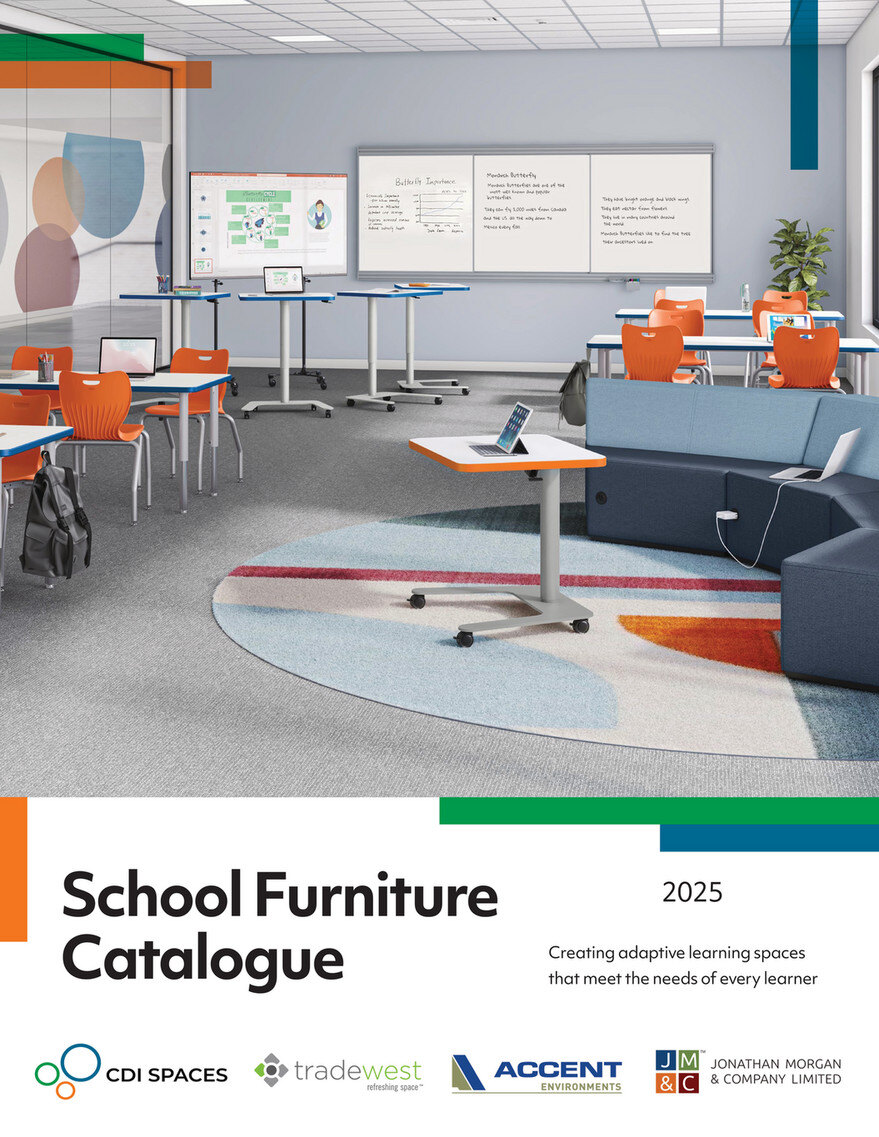
When Spaces Listen: Designing Workplaces That Adapt to People
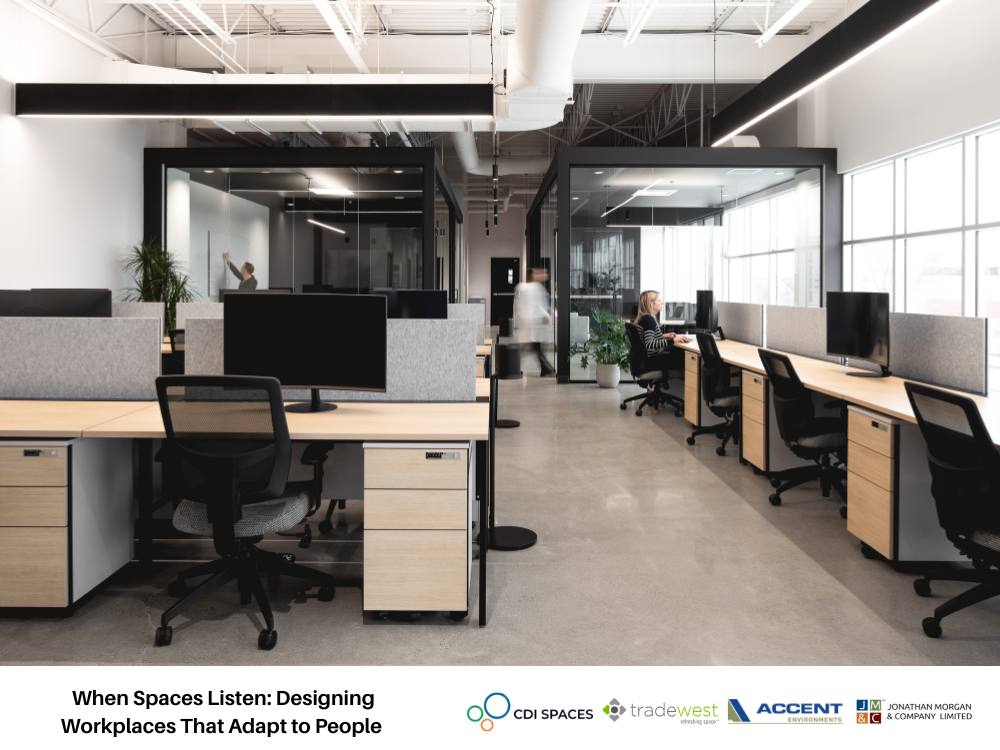
Imagine walking into an office that seems to understand you. The lighting adjusts to your preference; the furniture supports your posture without effort, and the layout encourages collaboration when needed but also offers privacy when focus is required. This isn’t science fiction - it’s the future of workplace design.
Spaces That Respond, Not Just Exist
Traditional office spaces were built with static needs in mind: rows of desks, generic lighting, and rigid schedules. But today, the most effective workplaces are those that listen, spaces that respond to how people work, move, and interact. These adaptive environments recognize that employee needs aren’t uniform, and flexibility is key to engagement and productivity.
Human-Centered Design in Action
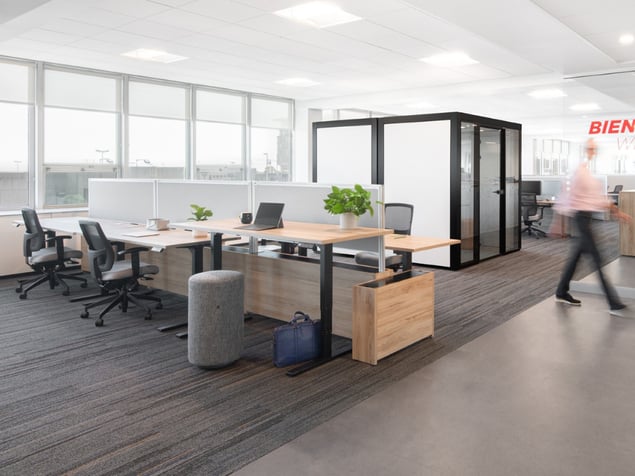
At the heart of adaptive workplaces is human-centered design. This approach starts by understanding the people who occupy the space. Designers consider everything from ergonomics and lighting to acoustics and social areas. Small adjustments, like movable partitions, sit-stand desks, or collaborative zones, can make a huge difference in how employees feel and perform.

Collaboration Without Compromise
Adaptive workplaces also solve a classic challenge: balancing collaboration and focus. Employees can shift seamlessly between quiet, private areas and dynamic team spaces. When spaces adapt to the work, people can focus without distraction and collaborate without friction.
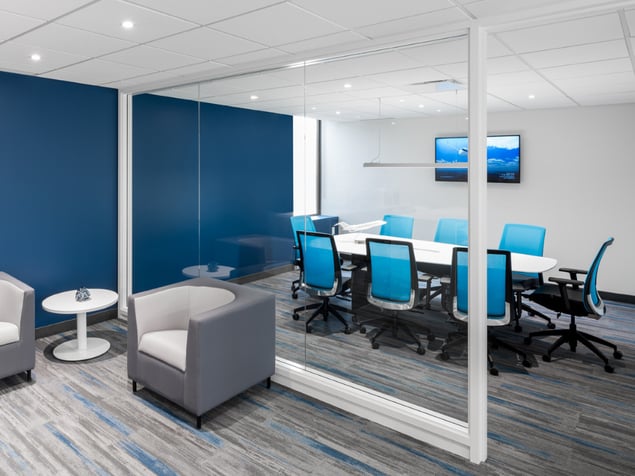
Designing workplaces that adapt to people isn’t just about aesthetics. It’s about experience, productivity, and engagement. When spaces listen, employees feel understood, supported, and empowered to do their best work.
Ready to create a workplace that truly listens? Let’s design a space where your team can thrive.